In the microscopic frontiers and macroscopic explorations of modern technology – from carving nanoscale circuits on chips to fine-tuning the mirrors of space telescopes – a critical precision motion control technology consistently provides decisive power support behind the scenes: piezoelectric actuation based on multilayer stack structures. With its sub-atomic displacement resolution and near-instantaneous response characteristics, it serves as the key bridge connecting electrical signals to precision mechanical motion, forming the cornerstone of high-end manufacturing and cutting-edge scientific research.
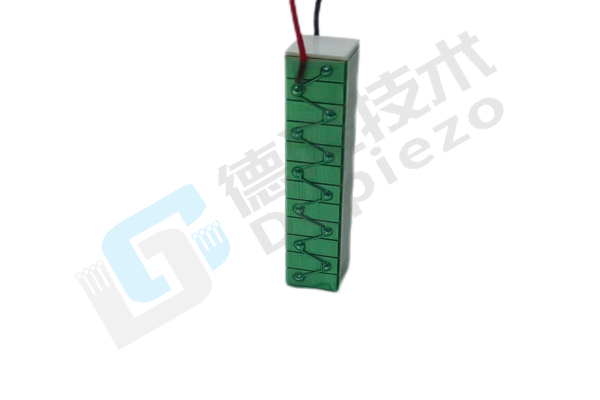
I. Semiconductor Microelectronics: Defining the Physical Limits of Moore's Law
In the semiconductor manufacturing industry, which demands the highest levels of precision, multilayer stack piezoelectric ceramics play an irreplaceable role as actuators. Within the core wafer stage system of a lithography machine, stack piezoelectric actuators are responsible for nanoscale alignment and leveling between the wafer and the reticle. Each minute expansion and contraction directly affects the consistency of chip linewidths and final yield. In wafer inspection and advanced packaging processes, whether for fast focusing in optical microscopy systems or high-precision stepping in probe stations, the vibration-free, high-stiffness displacement output provided by piezoelectric actuation ensures repeatability of measurements and operations at the sub-micron scale. Furthermore, in precision force control during chip bonding and on automated assembly lines for MEMS micro-devices, these solid-state actuators, with their clean, wear-free characteristics, enable the non-destructive pick-and-place of tiny, fragile components with high precision.
II. Precision Optics and Photonics: The Precision Hand Guiding Light Beams
When light serves as an information carrier or a processing tool, precise control over its path and phase becomes critical. In the packaging of core optical communication devices, the alignment accuracy between optical fibers and waveguides often needs to be controlled within tens of nanometers. Multi-axis positioning stages driven by multilayer stack piezoelectric ceramics can accomplish this search and locking process with picometer-level resolution, thereby minimizing link insertion loss. For large ground-based astronomical telescopes or high-end optical systems, the alignment of mirrors and surface figure correction also rely on arrays of piezoelectric actuators to achieve active optical control. In the field of laser precision machining, whether for high-speed scanning and positioning of laser beams via fast steering mirrors or for adjusting cavity length to stabilize laser frequency, the microsecond-level response speed provided by stack ceramics is unattainable by traditional mechanical structures.
III. Micro-Nano Characterization and Biomedicine: Probes for Exploring the Microscopic World
In instruments that allow humanity to perceive the microscopic world, the Atomic Force Microscope (AFM) and Scanning Tunneling Microscope (STM) serve as crucial windows. The core scanning actions of these devices – whether tracking the probe tip over a sample surface or maintaining constant tunneling current – are all performed by multilayer stack piezoelectric ceramics. Their sub-nanometer displacement output enables scientists to directly observe the arrangement of individual atoms and the morphology of electron clouds. This precision actuation technology has also permeated the frontiers of life sciences. In super-resolution fluorescence microscopy, piezoelectrically driven objective lens compensators effectively correct nanoscale defocus and drift, breaking through the optical diffraction limit. In single-molecule manipulation experiments, optical tweezers and magnetic tweezers systems rely on piezoelectric positioning stages to achieve piconewton-level mechanical measurements of DNA or protein molecules. In the realm of biological micro-manufacturing and precision dispensing, piezoelectrically driven micro-dispensers can accurately deliver picoliter-scale reagents to designated microarray spots, advancing the development of drug screening and gene sequencing technologies.
IV. Aerospace and Ultra-Precision Manufacturing: Reliable Actuation in Extreme Environments
Leaving the laboratory environment and entering the aerospace and defense sectors, the reliability of piezoelectric actuation technology faces severe challenges including extreme temperature fluctuations, intense vibration, and strong radiation. In space-based optical payloads, multilayer stack piezoelectric ceramics are widely used for fine positioning of camera lens assemblies and pointing stability compensation. Even under the thermal vacuum conditions of orbital operation, they maintain precise deformation output. The core calibration of inertial navigation and guidance systems, as well as various precision test instruments in extreme environments, also rely on their high energy density and inherent anti-electromagnetic interference properties to perform micron-level precise actions.
In the fields of terrestrial ultra-precision manufacturing and metrology, stack piezoelectric ceramics are similarly key to achieving breakthroughs in machining accuracy. The tool servo feed systems of ultra-precision lathes and grinders, using piezoelectric actuators to compensate for spindle runout and thermal errors, can directly machine optical-grade freeform surfaces. Micro-displacement actuators within nanometrology and traceability systems provide an accurate ruler traceable to the wavelength of light for various sensors. At the end-effectors of automated assembly lines for micro-devices, piezoelectrically driven micro-grippers work in concert with positioning stages, embedding micro-lenses or sensor chips into predetermined slots with gentle yet firm force, achieving the integration of precision mechanical and electronic functions.
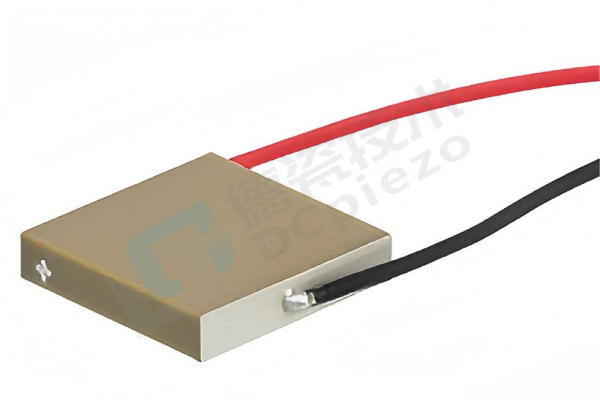
V. One-Stop Drive Chain Service: The Value Leap from Component to System
Guangdong Deci Technology Co., Ltd. deeply understands that a high-performance piezoelectric ceramic stack is only one link in the precision motion control chain. To unlock the full potential of this solid-state actuator in any given application, every step – from impedance matching of the drive power supply and dynamic simulation of structural integration to the optimization of closed-loop control algorithms – is crucial. Therefore, we are committed to providing a one-stop drive chain service covering component selection, drive matching, and application recommendations. By combining our self-developed stack ceramics with compatible drive power supplies and engineering expertise, we assist partners in rapidly navigating the technical path from functional verification to full system integration, collectively advancing precision manufacturing and scientific exploration into deeper dimensions.




24小时免费咨询
请输入您的联系电话,座机请加区号